Reading Structure and Interpretation of Computer Programs Again

I recently picked up Structure and Interpretation of Computer Programs again. I first read it at university, when Scheme felt remote from the software I expected to write. Returning to it with professional experience made the book much more useful.
SICP is often treated as a difficult classic or an internet meme. Its real value is the way it separates programming from the surface details of a language. The examples use Scheme, but the subject is how programs are assembled from smaller ideas.

Programs as processes
The book spends time on substitution, recursion, higher-order procedures, state, streams, and interpreters. These topics force the reader to trace a program's execution. Familiar syntax and frameworks cannot carry the explanation.
That approach changed how I read code. An abstraction is useful when it hides the right detail and preserves the behavior a caller needs. State is easier to reason about when its lifetime and owner are explicit. A language feature becomes less mysterious once you can build a small version of it yourself.
Scheme is part of the lesson
Scheme initially makes the book look dated. Its small core is precisely what lets the examples focus on evaluation and composition. There is little syntax between the reader and the idea.
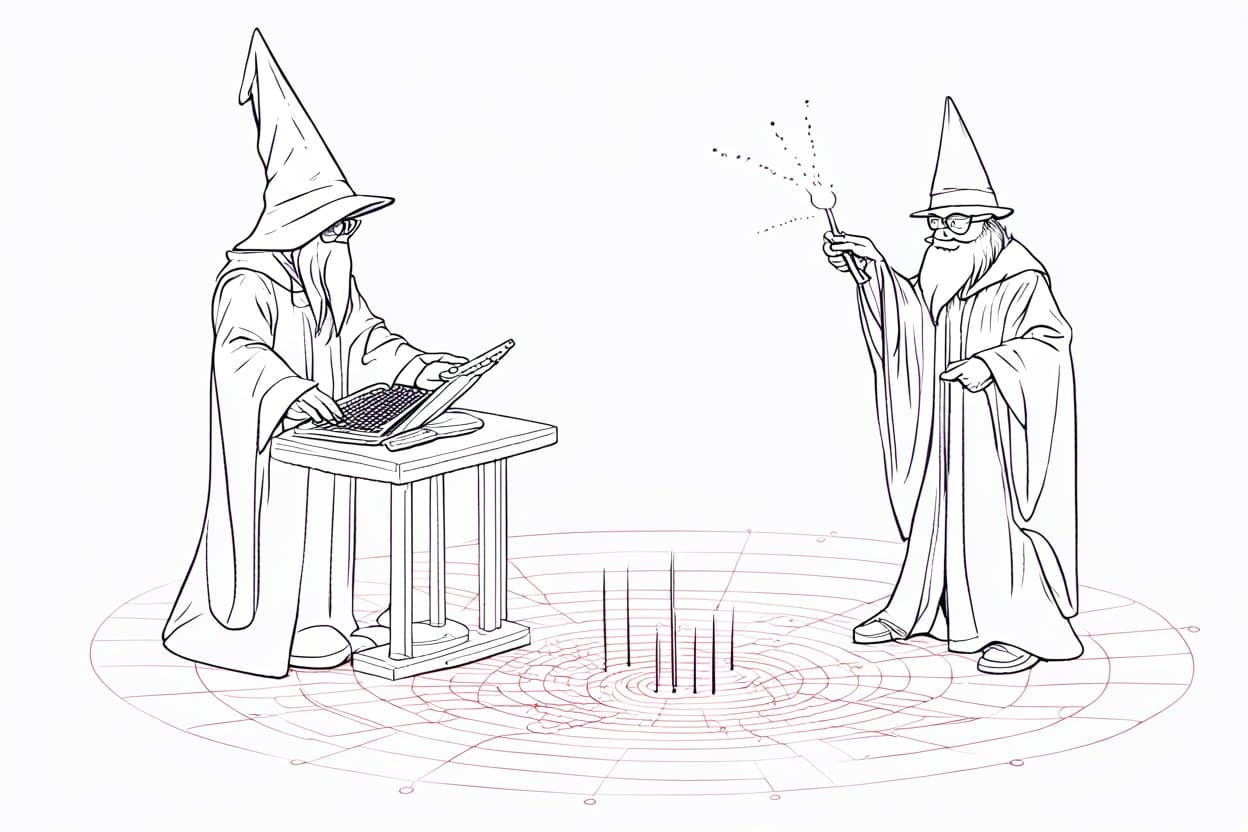
The exercises also reward experimentation. Changing an evaluator or implementing a stream makes the material concrete in a way that a summary cannot. Some chapters are slow, especially after years of working in languages with large standard libraries, but the difficulty is productive.
Why I returned to it
Daily product work encourages local thinking: finish the feature, fix the incident, update the dependency. SICP pulls the view back toward the structure of computation. It reminded me why I enjoyed computer science before deadlines and frameworks occupied most of the day.
The book will not teach a current web stack, and it is a poor choice for someone who only needs a quick introduction to programming. It is valuable for a programmer who wants to examine familiar ideas from first principles. Read it with a Scheme interpreter open and work through the exercises. The code is where the book earns its reputation.
Building something with AI?
I help small businesses turn ideas into software that pays off. Tell me what you’re working on and get a free first assessment.